
Introduction
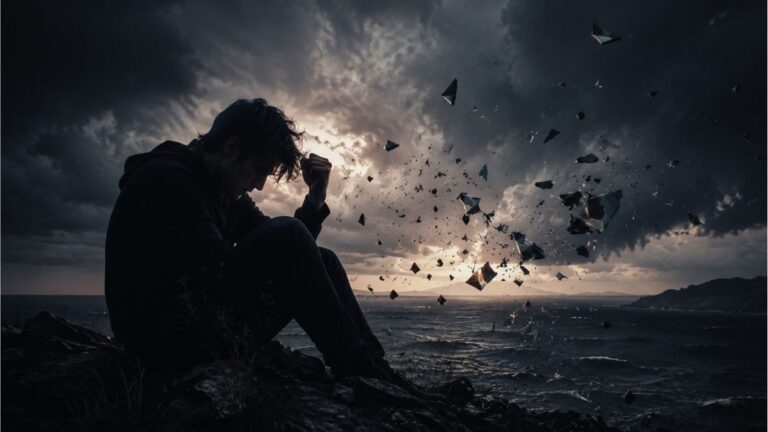
Poems about worry often begin in the most familiar places: a silent room, a dark road, a stormy sky, a restless thought, or a heart that cannot stop asking what might happen next. The best worry poems do not treat fear as something small or foolish. They show how anxiety, doubt, stress, grief, and uncertainty can fill ordinary life, and how poetry can give those feelings a shape we can finally understand.
This collection brings together classic poems about worry, anxiety, fear, hope, peace of mind, overthinking, and letting go of worry. Some poems speak directly about anxious waiting; others use darkness, rain, memory, birds, roads, and the sea to show what inner trouble feels like. Readers who enjoy carefully selected classic poetry may also explore more Featured Poems for related themes, voices, and close readings.
Poetry & Analysis
Selected Poems
Sad PoemsAnxiety
The hoar-frost crumbles in the sun,
The crisping steam of a train
Melts in the air, while two black birds
Sweep past the window again.
Along the vacant road, a red
Bicycle approaches; I wait
In a thaw of anxiety, for the boy
To leap down at our gate.
He has passed us by; but is it
Relief that starts in my breast?
Or a deeper bruise of knowing that still
She has no rest.
Overview Short Summary
This short worry poem turns an ordinary moment of waiting into a study of anxiety. The speaker watches for a message or arrival, feels relief when danger seems to pass, and then realizes that the deeper emotional trouble remains.
Core Ideas Main Themes
- Anxiety and waiting: The poem shows worry through suspense, silence, and a single expected arrival.
- Relief and unease: The speaker’s relief is complicated because the real source of suffering is still unresolved.
- Everyday fear: A simple road scene becomes emotionally charged through expectation.
Emotional Effect Tone and Mood
The tone is tense, watchful, and inwardly troubled, while the mood feels cold, uncertain, and quietly painful.
Close Reading Stanza-by-Stanza Explanation
Stanza 1
The frost, steam, and birds create a cold, passing scene that prepares the reader for emotional unease.
Stanza 2
The red bicycle becomes the focus of suspense as the speaker waits anxiously for the boy to arrive.
Stanza 3
The boy passes by, but the expected relief does not become real peace; worry shifts into a deeper sadness.
Craft Literary Devices
- Imagery: Frost, steam, birds, and the red bicycle make anxiety visible in the landscape.
- Contrast: The poem contrasts momentary relief with lasting inner pain.
Thanksgiving
Our cares are bold and push their way
Upon our thought and feeling.
They hand about us all the day,
Our time from pleasure stealing.
So unobtrusive many a joy
We pass by and forget it,
But worry strives to own our lives,
And conquers if we let it.
We ought to make the moments notes
Of happy, glad Thanksgiving;
The hours and days a silent phrase
Of music we are living.
And so the theme should swell and grow
As weeks and months pass o’er us,
And rise sublime at this good time,
A grand Thanksgiving chorus.
Overview Short Summary
This poem directly addresses worry and shows how daily cares can take over the mind if a person allows them to. The speaker offers gratitude as a way to recover attention, joy, and peace of mind.
Core Ideas Main Themes
- Worry and gratitude: The poem contrasts anxious thought with thankful attention.
- Daily joy: Small joys are easy to miss when worry dominates life.
- Emotional discipline: The speaker encourages readers to choose gratitude before care becomes a habit.
Emotional Effect Tone and Mood
The tone is encouraging and gently corrective, while the mood moves from burdened to hopeful.
Craft Literary Devices
- Personification: Worry is described as something that tries to own and conquer life.
- Musical imagery: Thanksgiving is imagined as notes, phrases, and a growing chorus.
The Year
What can be said in New Year rhymes,
That’s not been said a thousand times?
The new years come, the old years go,
We know we dream, we dream we know.
We rise up laughing with the light,
We lie down weeping with the night.
We hug the world until it stings,
We curse it then and sigh for wings.
We live, we love, we woo, we wed,
We wreathe our brides, we sheet our dead.
We laugh, we weep, we hope, we fear,
And that’s the burden of the year.
Overview Short Summary
This compact poem presents worry, hope, joy, grief, love, and loss as part of the repeating human year. It is useful for readers looking for short poems about worry and the emotional cycles of life.
Core Ideas Main Themes
- Hope and fear: The poem treats fear and hope as repeated parts of every year.
- Human change: Life is shown as a pattern of love, loss, laughter, and sorrow.
- Acceptance: The speaker does not deny worry but places it within a larger rhythm.
Emotional Effect Tone and Mood
The tone is reflective and balanced, and the mood is bittersweet.
Craft Literary Devices
- Repetition: The repeated structure gives the poem a cyclical feeling.
- Contrast: Laughing and weeping, loving and grieving, hope and fear sit side by side.
Thoughts
Catch your thoughts and hold them tightly,
Let each one an honor be;
Purge them, scourge them, burnish brightly,
Then in love set each one free.
Overview Short Summary
This short poem about thoughts speaks strongly to worry and overthinking. It suggests that thoughts should be noticed, examined, refined, and then released rather than allowed to control the mind.
Core Ideas Main Themes
- Overthinking: The poem turns thought into something that can be held and handled.
- Self-control: The speaker encourages careful attention to the inner life.
- Letting go: The final line suggests release instead of mental struggle.
Emotional Effect Tone and Mood
The tone is wise, concise, and calming, with a mood of inward discipline.
Craft Literary Devices
- Imperative voice: Commands such as “catch,” “hold,” and “set” make the poem feel practical.
- Metaphor: Thoughts are treated like objects that can be cleaned and polished.
Hope is the thing with feathers
Hope is the thing with feathers
That perches in the soul,
And sings the tune without the words,
And never stops at all,
And sweetest in the gale is heard;
And sore must be the storm
That could abash the little bird
That kept so many warm.
I’ve heard it in the chillest land,
And on the strangest sea;
Yet, never, in extremity,
It asked a crumb of me.
Overview Short Summary
Dickinson imagines hope as a bird that keeps singing inside the soul, even during storms. For a reader searching for poems about worry and hope, this poem offers one of the clearest images of inner resilience.
Core Ideas Main Themes
- Hope during worry: The bird keeps singing even when life feels stormy.
- Inner strength: Hope is presented as something quiet but persistent.
- Comfort: The poem suggests that hope gives freely without demanding payment.
Emotional Effect Tone and Mood
The tone is tender and confident, while the mood is comforting and uplifting.
Craft Literary Devices
- Extended metaphor: Hope is compared to a feathered bird living in the soul.
- Storm imagery: The gale and storm represent hardship, fear, and uncertainty.
Poetic Form Rhyme Scheme and Structure
The poem uses three compact quatrains, allowing the metaphor to develop from the soul, to the storm, and finally to extreme places of hardship.
Continue Reading
Related Poems & Articles
More selected reading from Sad Poems.