
Introduction
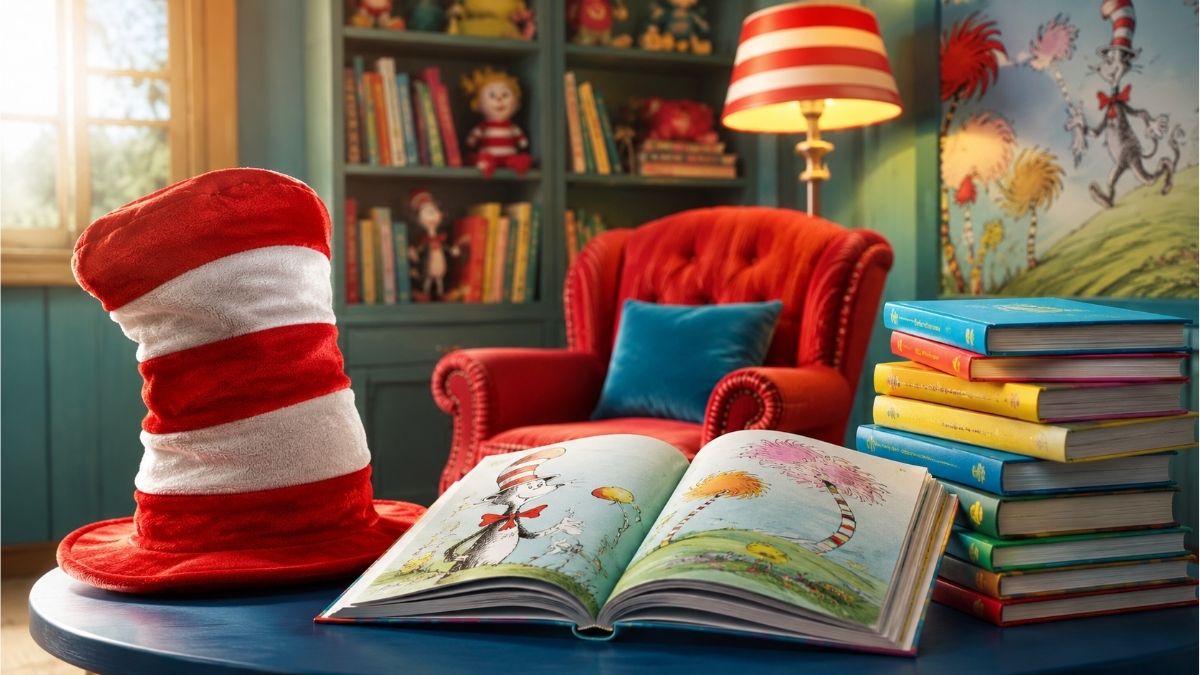
Dr. Seuss remains one of the most searched names in children’s poetry and beginner reading because his books combine rhyme, rhythm, playful language, invented words, memorable characters, and simple story movement. Readers often search for Dr. Seuss poems, Dr. Seuss rhymes, Dr. Seuss books for kindergarten, Dr. Seuss writing style, Dr. Seuss made-up words, Green Eggs and Ham meaning, The Cat in the Hat summary, The Lorax meaning, and Oh, the Places You’ll Go! meaning because they want clear explanations without losing the fun of the original work.
This post is built around those search needs and focuses only on real Dr. Seuss works. Since Dr. Seuss texts are rights-managed, full poem or book text is not reproduced here. Instead, each section gives original summaries, themes, tone, literary devices, reading-level value, and safe commentary. Readers who enjoy author-focused poetry guides can also explore Famous Poets for more literary background and reading ideas.
The works below are especially useful for parents, teachers, students, and general readers who want to understand why Dr. Seuss remains important for early reading. They show how rhyme can support phonics, how nonsense can build confidence, how invented words can make language exciting, and how simple stories can carry larger messages about courage, kindness, environment, imagination, and growing up.
Poetry & Analysis
Dr. Seuss Poems, Rhymes, and Stories
Featured PoemsThe Cat in the Hat
Overview Short Summary
“The Cat in the Hat” follows two children stuck indoors on a rainy day when the Cat arrives and turns their quiet house into a scene of chaos, games, tricks, and comic disorder. The story is one of Dr. Seuss’s most important beginner books because it uses simple vocabulary, rhyme, repetition, and fast movement to make reading feel active and fun.
Core Ideas Main Themes
- Imagination: The Cat transforms an ordinary rainy day into an impossible adventure.
- Order and chaos: The story balances playful disorder with the need to restore the house.
- Reading confidence: Simple words and rhyme help early readers move through the story.
Emotional Effect Tone and Mood
The tone is playful, mischievous, and energetic. The mood is funny and suspenseful because the Cat’s tricks become increasingly wild before order returns.
Craft Literary Devices
- Rhyme: The rhyming structure makes the story musical and easy to remember.
- Repetition: Repeated patterns support beginner reading.
- Character contrast: The Cat’s energy contrasts with the children’s uncertainty and the fish’s caution.
Green Eggs and Ham
Overview Short Summary
“Green Eggs and Ham” centers on Sam-I-Am repeatedly encouraging another character to try an unusual food. The simple conflict becomes a funny lesson about openness, persistence, and trying something new before judging it.
Core Ideas Main Themes
- Trying new things: The story encourages curiosity instead of instant refusal.
- Persistence: Sam-I-Am keeps asking in many different situations.
- Playful repetition: Repeated phrases help young readers predict and participate.
Emotional Effect Tone and Mood
The tone is comic, fast, and teasing. The mood stays light because the conflict is exaggerated through rhythm and repetition rather than serious pressure.
Craft Literary Devices
- Repetition: Repeated phrases create rhythm and reading practice.
- Rhyme: The rhyme makes the refusal-and-offer pattern memorable.
- Comic escalation: Each new setting makes the situation more absurd.
The Lorax
Overview Short Summary
“The Lorax” tells a cautionary story about environmental damage, greed, and responsibility. Through the Lorax and the Once-ler, Dr. Seuss presents a child-friendly warning about what happens when profit is valued more than nature.
Core Ideas Main Themes
- Environmental responsibility: The story asks readers to care for trees, animals, and natural places.
- Greed and consequence: The Once-ler’s choices damage the world around him.
- Hope and action: The story suggests that one caring person can begin change.
Emotional Effect Tone and Mood
The tone is playful but serious underneath. The mood moves from colorful wonder to warning, then toward hope.
Interpretation Symbols and Their Meaning
- The Lorax: Represents the voice that speaks for nature.
- Trees: Symbolize beauty, life, and resources that need protection.
- The final seed: Suggests responsibility, renewal, and the possibility of repair.
Oh, the Places You’ll Go!
Overview Short Summary
“Oh, the Places You’ll Go!” is a rhyming life-journey poem about leaving, choosing, succeeding, waiting, struggling, and moving forward. It is widely read for graduations and milestones because it speaks to both excitement and uncertainty.
Core Ideas Main Themes
- Growth: The poem presents life as a path filled with choices and movement.
- Resilience: It acknowledges failure, waiting, fear, and difficulty.
- Confidence: The reader is encouraged to keep going despite setbacks.
Emotional Effect Tone and Mood
The tone is encouraging, humorous, and wise. The mood is hopeful because the poem treats uncertainty as part of a meaningful journey.
Craft Literary Devices
- Extended metaphor: Life becomes a journey through many places and situations.
- Direct address: The speaker speaks to the reader as if giving personal advice.
- Rhythmic movement: The verse form supports the feeling of travel and progress.
Fox in Socks
Overview Short Summary
“Fox in Socks” is a fast, playful tongue-twister book built around tricky sounds, rhyming clusters, and comic word combinations. It is especially useful for readers searching for Dr. Seuss rhymes, Dr. Seuss wordplay, and beginner reading practice.
Core Ideas Main Themes
- Sound play: The book turns pronunciation into a game.
- Reading fluency: Tongue twisters challenge the reader to slow down and listen carefully.
- Nonsense: Silly combinations make language feel flexible and fun.
Craft Literary Devices
- Alliteration: Repeated consonant sounds create the tongue-twister effect.
- Rhyme: Rhyming word families organize the sound patterns.
- Comic escalation: The wordplay becomes more difficult and absurd as it continues.
Continue Reading
Related Poems & Articles
More selected reading from Featured Poems.