Poetry & Analysis
Selected Poems
Inspirational PoemsThe Second Coming
Turning and turning in the widening gyre
The falcon cannot hear the falconer;
Things fall apart; the centre cannot hold;
Mere anarchy is loosed upon the world,
The blood-dimmed tide is loosed, and everywhere
The ceremony of innocence is drowned;
The best lack all conviction, while the worst
Are full of passionate intensity.
Surely some revelation is at hand;
Surely the Second Coming is at hand.
The Second Coming! Hardly are those words out
When a vast image out of Spiritus Mundi
Troubles my sight: somewhere in sands of the desert
A shape with lion body and the head of a man,
A gaze blank and pitiless as the sun,
Is moving its slow thighs, while all about it
Reel shadows of the indignant desert birds.
The darkness drops again; but now I know
That twenty centuries of stony sleep
Were vexed to nightmare by a rocking cradle,
And what rough beast, its hour come round at last,
Slouches towards Bethlehem to be born?
Overview Short Summary
The poem imagines a world losing order and moving toward a terrifying new historical moment.
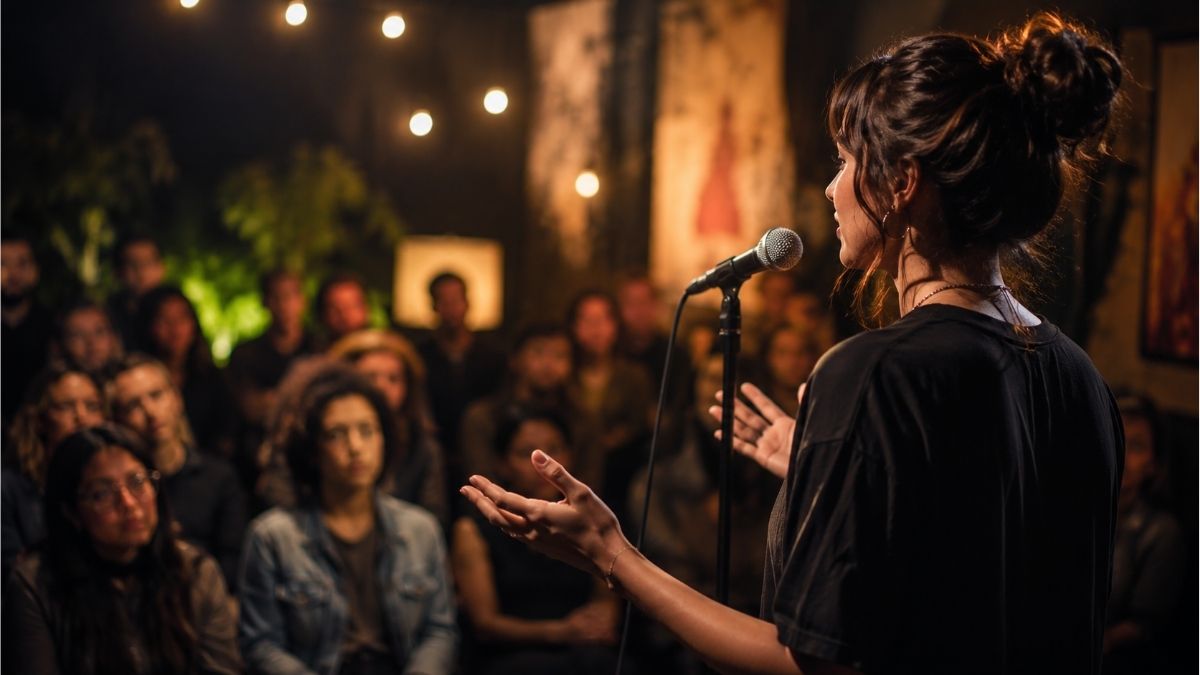
Performance Note Why It Works as Spoken Word
This is a powerful spoken word poem about society and change. Read it with a widening sense of alarm, especially after the opening lines.
Core Ideas Main Themes
- Chaos: A key idea that supports the poem’s spoken word impact.
- History: A key idea that supports the poem’s spoken word impact.
- Fear of change: A key idea that supports the poem’s spoken word impact.
When You Are Old
When you are old and grey and full of sleep,
And nodding by the fire, take down this book,
And slowly read, and dream of the soft look
Your eyes had once, and of their shadows deep;
How many loved your moments of glad grace,
And loved your beauty with love false or true,
But one man loved the pilgrim soul in you,
And loved the sorrows of your changing face;
And bending down beside the glowing bars,
Murmur, a little sadly, how Love fled
And paced upon the mountains overhead
And hid his face amid a crowd of stars.
Overview Short Summary
The speaker imagines a future moment when the beloved remembers a deeper love that may have been lost.
Performance Note Why It Works as Spoken Word
This is a short spoken word poem about love and regret. Keep the voice intimate and reflective, not dramatic at first.
Core Ideas Main Themes
- Love: A key idea that supports the poem’s spoken word impact.
- Memory: A key idea that supports the poem’s spoken word impact.
- Regret: A key idea that supports the poem’s spoken word impact.
A Litany in Time of Plague
Adieu, farewell, earth’s bliss;
This world uncertain is;
Fond are life’s lustful joys;
Death proves them all but toys;
None from his darts can fly;
I am sick, I must die.
Lord, have mercy on us!
Rich men, trust not in wealth,
Gold cannot buy you health;
Physic himself must fade;
All things to end are made;
The plague full swift goes by;
I am sick, I must die.
Lord, have mercy on us!
Beauty is but a flower
Which wrinkles will devour;
Brightness falls from the air;
Queens have died young and fair;
Dust hath closed Helen’s eye;
I am sick, I must die.
Lord, have mercy on us!
Strength stoops unto the grave,
Worms feed on Hector brave;
Swords may not fight with fate;
Earth still holds ope her gate;
Come, come! the bells do cry;
I am sick, I must die.
Lord, have mercy on us!
Wit with his wantonness
Tasteth death’s bitterness;
Hell’s executioner
Hath no ears for to hear
What vain art can reply;
I am sick, I must die.
Lord, have mercy on us!
Haste, therefore, each degree,
To welcome destiny;
Heaven is our heritage,
Earth but a player’s stage;
Mount we unto the sky;
I am sick, I must die.
Lord, have mercy on us!
Overview Short Summary
The poem reflects on mortality and reminds every class of person that wealth, beauty, strength, and wit cannot escape death.
Performance Note Why It Works as Spoken Word
The repeated refrain gives this poem a chant-like performance style. It can be read slowly with a solemn rhythm.
Core Ideas Main Themes
- Mortality: A key idea that supports the poem’s spoken word impact.
- Faith: A key idea that supports the poem’s spoken word impact.
- Human equality: A key idea that supports the poem’s spoken word impact.
To His Coy Mistress
Had we but world enough and time,
This coyness, lady, were no crime.
We would sit down and think which way
To walk, and pass our long love’s day.
Thou by the Indian Ganges’ side
Shouldst rubies find; I by the tide
Of Humber would complain. I would
Love you ten years before the Flood,
And you should, if you please, refuse
Till the conversion of the Jews.
My vegetable love should grow
Vaster than empires and more slow;
An hundred years should go to praise
Thine eyes, and on thy forehead gaze;
Two hundred to adore each breast,
But thirty thousand to the rest;
An age at least to every part,
And the last age should show your heart.
For, lady, you deserve this state,
Nor would I love at lower rate.
But at my back I always hear
Time’s winged chariot hurrying near;
And yonder all before us lie
Deserts of vast eternity.
Thy beauty shall no more be found;
Nor, in thy marble vault, shall sound
My echoing song: then worms shall try
That long-preserved virginity,
And your quaint honour turn to dust,
And into ashes all my lust:
The grave’s a fine and private place,
But none, I think, do there embrace.
Now therefore, while the youthful hue
Sits on thy skin like morning dew,
And while thy willing soul transpires
At every pore with instant fires,
Now let us sport us while we may;
And now, like am’rous birds of prey,
Rather at once our time devour
Than languish in his slow-chapt power.
Let us roll all our strength and all
Our sweetness up into one ball,
And tear our pleasures with rough strife
Through the iron gates of life.
Thus, though we cannot make our sun
Stand still, yet we will make him run.
Overview Short Summary
The speaker argues that life is short, time is moving fast, and love should not be delayed forever.
Performance Note Why It Works as Spoken Word
This poem works as dramatic spoken word because the argument changes in three stages: fantasy, warning, and urgent persuasion.
Core Ideas Main Themes
- Time: A key idea that supports the poem’s spoken word impact.
- Desire: A key idea that supports the poem’s spoken word impact.
- Mortality: A key idea that supports the poem’s spoken word impact.
The Passionate Shepherd to His Love
Come live with me and be my love,
And we will all the pleasures prove
That valleys, groves, hills, and fields,
Woods, or steepy mountain yields.
And we will sit upon the rocks,
Seeing the shepherds feed their flocks,
By shallow rivers to whose falls
Melodious birds sing madrigals.
And I will make thee beds of roses
And a thousand fragrant posies,
A cap of flowers, and a kirtle
Embroidered all with leaves of myrtle;
A gown made of the finest wool
Which from our pretty lambs we pull;
Fair lined slippers for the cold,
With buckles of the purest gold;
A belt of straw and ivy buds,
With coral clasps and amber studs:
And if these pleasures may thee move,
Come live with me, and be my love.
The shepherds’ swains shall dance and sing
For thy delight each May morning:
If these delights thy mind may move,
Then live with me and be my love.
Overview Short Summary
The speaker invites the beloved into an ideal life of nature, pleasure, song, and romance.
Performance Note Why It Works as Spoken Word
This is a smooth spoken word poem about love. Deliver the repeated invitation warmly, as if making a direct promise.
Core Ideas Main Themes
- Love: A key idea that supports the poem’s spoken word impact.
- Nature: A key idea that supports the poem’s spoken word impact.
- Promise: A key idea that supports the poem’s spoken word impact.
Continue Reading
Related Poems & Articles
More selected reading from Inspirational Poems.