
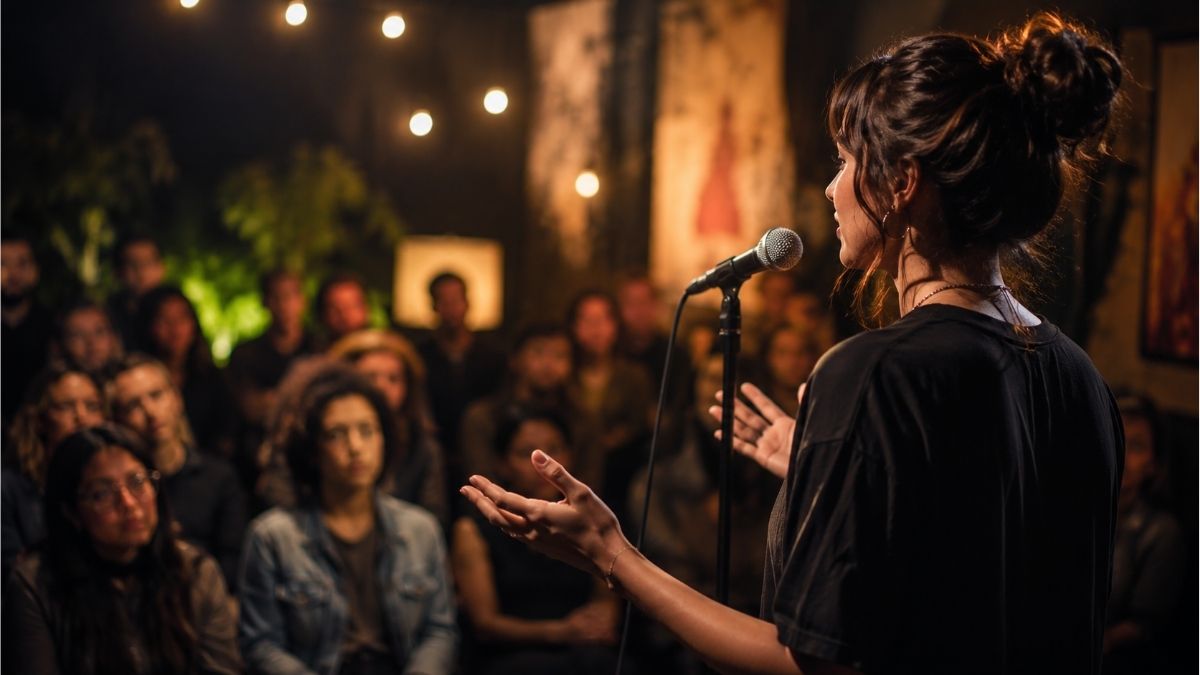
Poetry & Analysis
Selected Poems
Inspirational PoemsThe Eagle
He clasps the crag with crooked hands;
Close to the sun in lonely lands,
Ringed with the azure world, he stands.
The wrinkled sea beneath him crawls;
He watches from his mountain walls,
And like a thunderbolt he falls.
Overview Short Summary
The poem shows an eagle high above the sea, then captures its sudden downward movement.
Performance Note Why It Works as Spoken Word
This is a short spoken word poem for students because the voice can shift from stillness to sudden action in only six lines.
Core Ideas Main Themes
- Power: A key idea that supports the poem’s spoken word impact.
- Nature: A key idea that supports the poem’s spoken word impact.
- Movement: A key idea that supports the poem’s spoken word impact.
Ozymandias
I met a traveller from an antique land,
Who said—’Two vast and trunkless legs of stone
Stand in the desert. . . . Near them, on the sand,
Half sunk a shattered visage lies, whose frown,
And wrinkled lip, and sneer of cold command,
Tell that its sculptor well those passions read
Which yet survive, stamped on these lifeless things,
The hand that mocked them, and the heart that fed;
And on the pedestal, these words appear:
My name is Ozymandias, King of Kings;
Look on my Works, ye Mighty, and despair!
Nothing beside remains. Round the decay
Of that colossal Wreck, boundless and bare
The lone and level sands stretch far away.’
Overview Short Summary
A traveler describes a ruined statue whose proud message is now surrounded by empty desert.
Performance Note Why It Works as Spoken Word
Perform the king’s inscription with pride, then let the final emptiness undercut that pride. This contrast makes it useful for spoken word poetry analysis.
Core Ideas Main Themes
- Power: A key idea that supports the poem’s spoken word impact.
- Time: A key idea that supports the poem’s spoken word impact.
- Irony: A key idea that supports the poem’s spoken word impact.
England in 1819
An old, mad, blind, despised, and dying king,—
Princes, the dregs of their dull race, who flow
Through public scorn,—mud from a muddy spring,—
Rulers who neither see, nor feel, nor know,
But leech-like to their fainting country cling,
Till they drop, blind in blood, without a blow,—
A people starved and stabbed in the untilled field,—
An army, which liberticide and prey
Makes as a two-edged sword to all who wield,—
Golden and sanguine laws which tempt and slay;
Religion Christless, Godless—a book sealed;
A Senate, Time’s worst statute, unrepealed,—
Are graves, from which a glorious Phantom may
Burst, to illumine our tempestuous day.
Overview Short Summary
The poem attacks corrupt power, injustice, hunger, violence, and political failure, then ends with the possibility of awakening.
Performance Note Why It Works as Spoken Word
This is useful for spoken word poetry about social issues. Speak it with controlled anger rather than speed, so each accusation is clear.
Core Ideas Main Themes
- Political anger: A key idea that supports the poem’s spoken word impact.
- Injustice: A key idea that supports the poem’s spoken word impact.
- Hope after decay: A key idea that supports the poem’s spoken word impact.
Men of England
Men of England, wherefore plough
For the lords who lay ye low?
Wherefore weave with toil and care
The rich robes your tyrants wear?
Wherefore feed and clothe and save,
From the cradle to the grave,
Those ungrateful drones who would
Drain your sweat—nay, drink your blood?
Wherefore, Bees of England, forge
Many a weapon, chain, and scourge,
That these stingless drones may spoil
The forced produce of your toil?
Have ye leisure, comfort, calm,
Shelter, food, love’s gentle balm?
Or what is ye buy so dear
With your pain and with your fear?
The seed ye sow, another reaps;
The wealth ye find, another keeps;
The robes ye weave, another wears;
The arms ye forge, another bears.
Sow seed,—but let no tyrant reap;
Find wealth,—let no impostor heap;
Weave robes,—let not the idle wear;
Forge arms,—in your defence to bear.
Shrink to your cellars, holes, and cells;
In halls ye deck, another dwells.
Why shake the chains ye wrought? Ye see
The steel ye tempered glance on ye.
With plough and spade and hoe and loom,
Trace your grave, and build your tomb,
And weave your winding-sheet, till fair
England be your sepulchre.
Overview Short Summary
The speaker challenges workers to see how their labor is used to enrich and empower others.
Performance Note Why It Works as Spoken Word
The direct questions make this feel like a spoken word poem for society and justice. Let the repeated ‘wherefore’ lines sound like a challenge.
Core Ideas Main Themes
- Labor: A key idea that supports the poem’s spoken word impact.
- Justice: A key idea that supports the poem’s spoken word impact.
- Awakening: A key idea that supports the poem’s spoken word impact.
The Tyger
Tyger Tyger, burning bright,
In the forests of the night;
What immortal hand or eye,
Could frame thy fearful symmetry?
In what distant deeps or skies
Burnt the fire of thine eyes?
On what wings dare he aspire?
What the hand, dare seize the fire?
And what shoulder, & what art,
Could twist the sinews of thy heart?
And when thy heart began to beat,
What dread hand? & what dread feet?
What the hammer? what the chain,
In what furnace was thy brain?
What the anvil? what dread grasp,
Dare its deadly terrors clasp!
When the stars threw down their spears
And water’d heaven with their tears:
Did he smile his work to see?
Did he who made the Lamb make thee?
Tyger Tyger burning bright,
In the forests of the night:
What immortal hand or eye,
Dare frame thy fearful symmetry?
Overview Short Summary
The speaker asks who could have created a creature as beautiful, terrifying, and powerful as the tiger.
Performance Note Why It Works as Spoken Word
The repeated questions make this an excellent spoken word poetry example with rhythm, mystery, and dramatic sound.
Core Ideas Main Themes
- Creation: A key idea that supports the poem’s spoken word impact.
- Fear: A key idea that supports the poem’s spoken word impact.
- Power: A key idea that supports the poem’s spoken word impact.
Continue Reading
Related Poems & Articles
More selected reading from Inspirational Poems.