
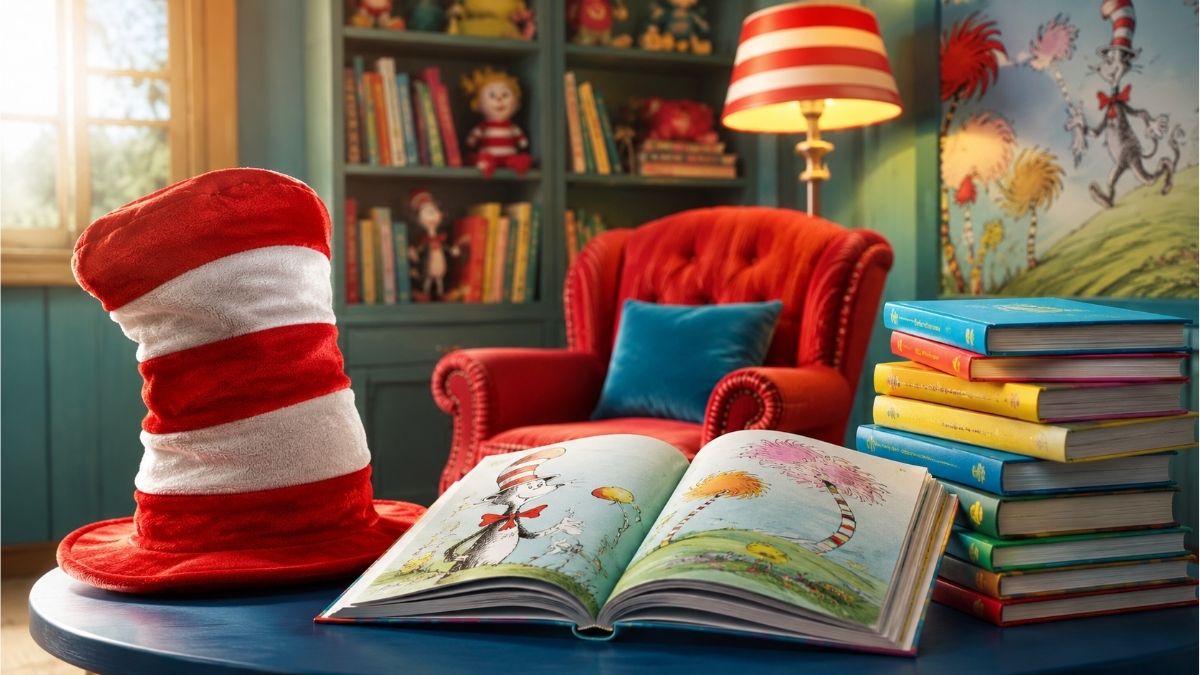
Imagination & Creativity
Dr. Seuss Poems, Rhymes, and Stories
Featured PoemsOh, the Thinks You Can Think!
Overview Short Summary
“Oh, the Thinks You Can Think!” celebrates imagination by encouraging readers to imagine strange, bright, impossible things. It is a good work for keywords around Dr. Seuss imagination, creativity, made-up words, and thinking skills.
Core Ideas Main Themes
- Creativity: Thinking becomes an adventure rather than a task.
- Freedom of imagination: The book invites readers to picture impossible things.
- Language play: Unusual phrasing makes thinking feel flexible.
Emotional Effect Tone and Mood
The tone is excited, encouraging, and whimsical. The mood is open-ended because the book treats imagination as limitless.
The Sneetches
Overview Short Summary
“The Sneetches” is a story about social division, status, and the foolishness of judging others by external differences. Its message remains useful for classroom discussions about prejudice, fairness, and belonging.
Core Ideas Main Themes
- Equality: The story questions social systems built on artificial differences.
- Prejudice: The Sneetches judge one another by outward marks.
- Manipulation: A profit-seeking character takes advantage of insecurity and division.
Craft Literary Devices
- Allegory: The story represents real social prejudice through imaginary creatures.
- Satire: The repeated changing of status marks mocks shallow discrimination.
- Symbolism: The star becomes a symbol of false superiority.
Yertle the Turtle
Overview Short Summary
“Yertle the Turtle” is a rhyming story about a turtle king whose desire for more power causes suffering for others below him. The poem-like story works well for readers searching for Dr. Seuss themes, moral lessons, and literary analysis.
Core Ideas Main Themes
- Power and pride: Yertle wants to rise higher regardless of others’ pain.
- Justice: The story shows that unfair power can collapse.
- Voice from below: The smallest or lowest character can still matter.
Craft Literary Devices
- Allegory: The turtle stack represents hierarchy and oppression.
- Rhyme: The verse makes the moral story readable and memorable.
- Irony: Yertle’s attempt to become greater leads to his fall.
The Foot Book
Overview Short Summary
“The Foot Book” uses feet, opposites, repeated words, and simple phrases to help young readers recognize patterns. It is a strong example of how Dr. Seuss turns a basic concept into rhythmic early-reading practice.
Core Ideas Main Themes
- Opposites: The book uses contrast to build vocabulary.
- Repetition: Repeated language helps readers predict what comes next.
- Early literacy: Simple concepts become reading practice through rhyme and rhythm.
Poetic Form Rhyme Scheme and Structure
The structure is based on short repeated phrases and contrast pairs. This makes it especially useful for early readers who are learning basic descriptive language.
Reader Questions
Frequently Asked Questions
Are Dr. Seuss poems public domain?
No. Dr. Seuss works are rights-managed and should not be reproduced in full without permission from the rights holder or publisher.
Why is the full Dr. Seuss poem text not included here?
The full text is not included because Dr. Seuss works are protected. This article provides original summaries, themes, meanings, and literary commentary instead of reproducing the protected text.
What are the best Dr. Seuss books for beginner readers?
Helpful beginner titles include “The Cat in the Hat,” “Hop on Pop,” “Green Eggs and Ham,” “One Fish Two Fish Red Fish Blue Fish,” “Fox in Socks,” “Mr. Brown Can Moo! Can You?” and “Dr. Seuss’s ABC.”
What is Dr. Seuss’s writing style?
Dr. Seuss’s writing style is known for rhyme, rhythm, repetition, invented words, playful characters, comic exaggeration, and simple vocabulary that supports early reading.
Why do Dr. Seuss rhymes help children read?
His rhymes help children hear sound patterns, predict words, recognize word families, and enjoy repetition. This makes reading feel like play rather than a difficult task.
What Dr. Seuss works are best for meaning and analysis?
For literary meaning and themes, “The Lorax,” “Horton Hears a Who!,” “The Sneetches,” “Yertle the Turtle,” and “Oh, the Places You’ll Go!” are especially useful because they combine rhyme with social, moral, or life lessons.
Continue Reading
Related Poems & Articles
More selected reading from Featured Poems.