Poetry & Analysis
Sunflower Poems About Love and Separation
Nature PoemsHer Voice
The wild bee reels from bough to bough
With his furry coat and his gauzy wing.
Now in a lily-cup, and now
Setting a jacinth bell a-swing,
In his wandering;
Sit closer love: it was here I trow
I made that vow,
Swore that two lives should be like one
As long as the sea-gull loved the sea,
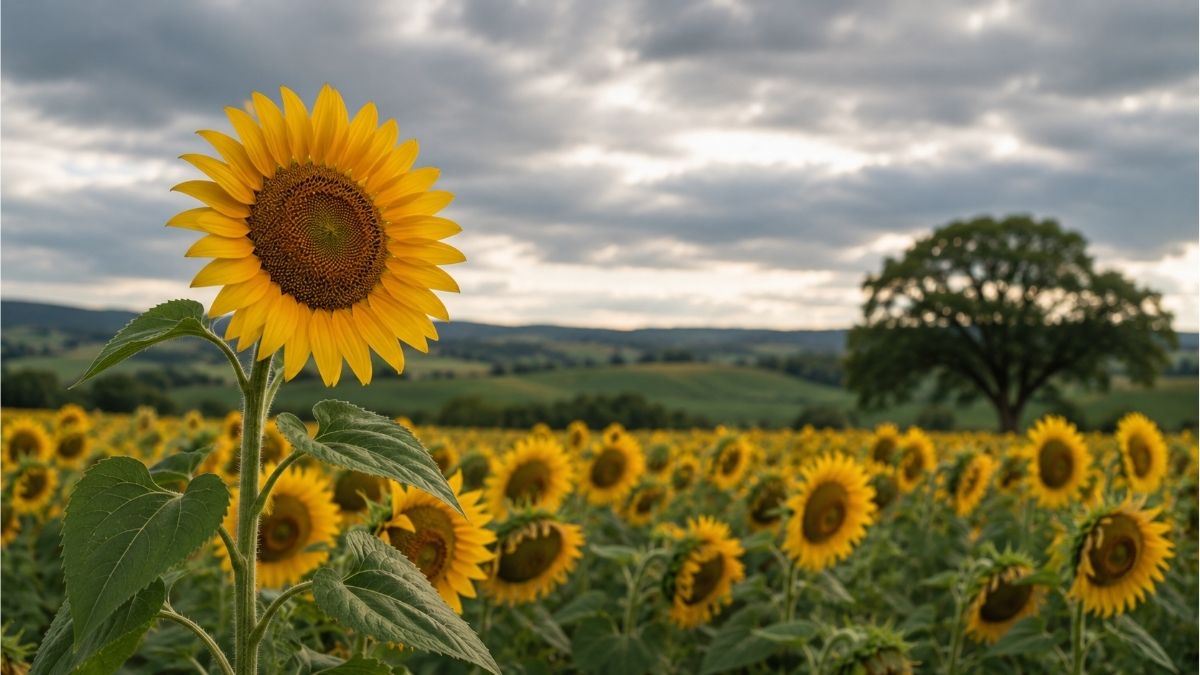
As long as the sunflower sought the sun,—
It shall be, I said, for eternity
‘Twixt you and me!
Dear friend, those times are over and done.
Love’s web is spun.
Look upward where the poplar trees
Sway in the summer air,
Here in the valley never a breeze
Scatters the thistledown, but there
Great winds blow fair
From the mighty murmuring mystical seas,
And the wave-lashed leas.
Look upward where the white gull screams,
What does it see that we do not see?
Is that a star? or the lamp that gleams
On some outward voyaging argosy,—
Ah! can it be
We have lived our lives in a land of dreams!
How sad it seems.
Sweet, there is nothing left to say
But this, that love is never lost,
Keen winter stabs the breasts of May
Whose crimson roses burst his frost,
Ships tempest-tossed
Will find a harbor in some bay,
And so we may.
And there is nothing left to do
But to kiss once again, and part,
Nay, there is nothing we should rue,
I have my beauty,—you your Art,
Nay, do not start,
One world was not enough for two
Like me and you.
Overview Short Summary
Two people remember a promise that their lives would remain united as naturally as a sunflower follows the sun. The relationship has ended, but the speaker insists that love itself is not entirely lost.
Core Ideas Main Themes
- Broken promises: A vow of eternal unity does not survive reality.
- Love and separation: The final movement accepts parting without denying the past.
- Dream and reality: The lovers wonder whether their shared world was always a dream.
Significance Why the Sunflower Image Matters
The sunflower’s dependable turn toward the sun expresses the certainty the lovers once expected from their relationship. Its natural faithfulness makes the broken vow more poignant.
Reader Questions
Frequently Asked Questions
What are some famous poems about sunflowers?
William Blake’s “Ah! Sunflower,” James Montgomery’s “The Sunflower,” Sarah Orne Jewett’s “The Soul of the Sunflower,” and Dora Greenwell’s “The Sunflower” are notable examples that connect the flower with light, faith, devotion, and spiritual longing.
Which sunflower poem is suitable for children?
Hilda Conkling’s “Sun Flowers” is the clearest choice for younger readers. Its playful speaker imagines that the flowers may grow high enough to touch the wet blue sky.
What is a good inspirational sunflower poem?
“An Ode to the Kansas Sunflower” presents the flower as resilient because it continues growing beside roads, beyond fences, and in places untouched by the plow. “To the Sunflower” by Yone Noguchi also celebrates energy and wholehearted life.
What do sunflowers symbolize in poetry?
Sunflowers commonly symbolize hope, devotion, faith, growth, ambition, resilience, and the desire to move toward light. In autumn poems, a bending sunflower can also symbolize age, decline, or mortality.
Which sunflower poem is about friendship?
Oliver Wendell Holmes’s “No Time Like the Old Time” contrasts the golden but scentless sunflower of fame with the sweeter and more sustaining value of friendship.
Why do poets connect sunflowers with the sun?
The flower’s visual resemblance to the sun and its habit of turning with light make it a natural symbol of attention and devotion. Poets use that relationship to explore spiritual faith, love, hope, and unreachable desire.
Continue Reading
Related Poems & Articles
More selected reading from Nature Poems.