Poetry & Analysis
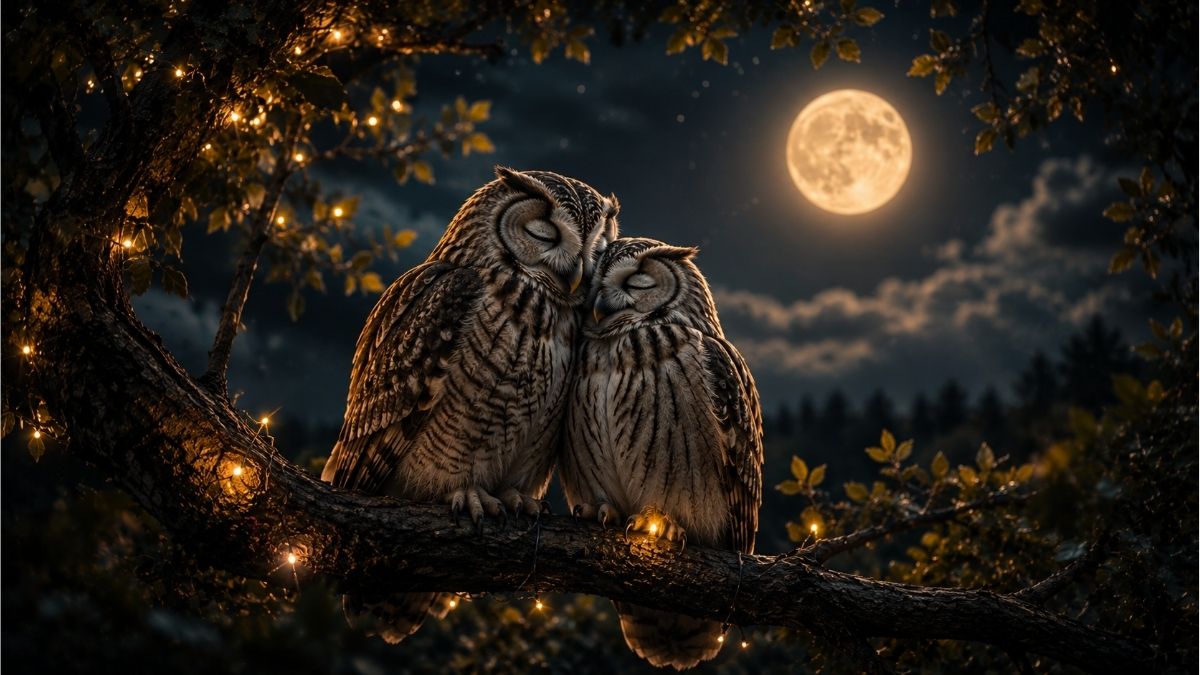
Selected Owl Love Poems
Animal PoemsThe Owl, the Eel and the Warming-Pan
The owl and the eel and the warming-pan,
They went to call on the soap-fat man.
The soap-fat man he was not within:
He’d gone for a ride on his rolling-pin.
So they all came back by the way of the town,
And turned the meeting-house upside down.
Overview Short Summary
“The Owl, the Eel and the Warming-Pan” is a playful nonsense poem in which the owl joins an absurd little journey. It supports cute owl poem and owl-themed verse intent.
Core Ideas Main Themes
- \n
- Playful animal fantasy: The owl becomes part of a strange comic group.
- Nonsense adventure: The poem values surprise more than realistic plot.
- Whimsical companionship: The owl travels with unlikely partners, giving the poem a light social energy.
\n
Emotional Effect Tone and Mood
The tone is silly, lively, and whimsical. The mood is playful because the poem turns impossible action into a quick comic adventure.
Interpretation Animal Symbolism
The owl symbolizes fantasy, surprise, and comic night-bird strangeness. In an owl-love collection, it adds a lighter branch of owl affection: delight in the bird’s odd charm.
Close Reading Stanza-by-Stanza Explanation
Single Stanza
The owl, eel, and warming-pan visit the soap-fat man, fail to find him, and return by town in comic disorder. The poem works through absurd movement rather than emotional story.
Literary Technique Imagery and Personification
The imagery is deliberately strange: an owl, an eel, a warming-pan, a soap-fat man, a rolling-pin ride, and an upside-down meeting-house. Personification appears because the owl and objects behave like social visitors.
Craft Literary Devices
- \n
- Nonsense imagery: The poem combines unrelated objects and animals.
- Personification: The owl and warming-pan behave like people making a call.
- Rhyme: The simple rhymes give the absurd scene speed.
- Comic reversal: The meeting-house being turned upside down creates a surprise ending.
\n
Poetic Form Rhyme Scheme and Structure
The poem is a compact six-line nonsense verse. Its short, direct structure makes it easy to read as a quick owl-themed poem.
A Wise Old Owl
A wise old owl sat in an oak;
The more he saw the less he spoke;
The less he spoke the more he heard;
Why can’t we all be like that wise old bird?
Overview Short Summary
“A Wise Old Owl” is a short moral verse about silence, listening, and wisdom. It is not a direct love poem, but it strongly supports wise owl love poem and owl symbolism searches.
Core Ideas Main Themes
- \n
- Wisdom: The owl becomes a model of careful attention.
- Listening: The poem values hearing more than speaking.
- Emotional maturity: In love symbolism, the owl suggests a relationship built on patience and understanding.
\n
Emotional Effect Tone and Mood
The tone is instructive, calm, and reflective. The mood is thoughtful because the owl becomes an example for human behavior.
Interpretation Animal Symbolism
The owl symbolizes wisdom, restraint, patience, and deep listening. For love poetry, these qualities can represent mature affection rather than dramatic romance.
Close Reading Stanza-by-Stanza Explanation
Single Stanza
The poem says the owl sees more, speaks less, and hears more. The final question turns the owl’s behavior into a human lesson.
Literary Technique Imagery and Personification
The imagery is simple: an owl sitting in an oak. Personification appears because the owl’s silence and listening are treated as moral wisdom.
Craft Literary Devices
- \n
- Repetition: “The more” and “the less” create a memorable pattern.
- Parallelism: The middle lines balance seeing, speaking, and hearing.
- Symbolism: The owl represents wisdom and restraint.
- Rhetorical question: The final line invites readers to imitate the owl.
\n
Poetic Form Rhyme Scheme and Structure
The poem is a four-line moral rhyme. Its concise structure makes it suitable for short owl quotes and wise owl poem searches.
Takeaway Moral Lesson
The moral lesson is that wise love often listens more than it speaks. The owl becomes a symbol of patience, understanding, and emotional self-control.
The Owl-Critic
“Who stuffed that white owl?” No one spoke in the shop:
The barber was busy, and he couldn’t stop;
The customers, waiting their turns, were all reading
The Daily, the Herald, the Post, little heeding
The young man who blurted out such a blunt question;
Not one raised a head, or even made a suggestion;
And the barber kept on shaving.
“Don’t you see, Mister Brown,”
Cried the youth, with a frown,
“How wrong the whole thing is,
How preposterous each wing is,
How flattened the head is, how jammed down the neck is—
In short, the whole owl, what an ignorant wreck ’tis!
I make no apology;
I’ve learned owl-eology,
I’ve passed days and nights in a hundred collections,
And cannot be blinded to any deflections
Arising from unskillful fingers that fail
To stuff a bird right, from his beak to his tail.
Mister Brown! Mister Brown!
Do take that bird down,
Or you’ll soon be the laughing-stock all over town!”
And the barber kept on shaving.
“I’ve studied owls,
And other night fowls,
And I tell you
What I know to be true:
An owl cannot roost
With his limbs so unloosed;
No owl in this world
Ever had his claws curled,
Ever had his legs slanted,
Ever had his bill canted,
Ever had his neck screwed
Into that attitude.
He can’t do it, because
‘Tis against all bird-laws.
Anatomy teaches,
Ornithology preaches,
An owl has a toe
That can’t turn out so!
I’ve made the white owl my study for years,
And to see such a job almost moves me to tears!
Mister Brown, I’m amazed
You should be so gone crazed
As to put up a bird
In that posture absurd!
To look at that owl really brings on a dizziness;
The man who stuffed him don’t half know his business!”
And the barber kept on shaving.
“Examine those eyes.
I’m filled with surprise
Taxidermists should pass
Off on you such poor glass;
So unnatural they seem
They’d make Audubon scream,
And John Burroughs laugh
To encounter such chaff.
Do take that bird down;
Have him stuffed again, Brown!”
And the barber kept on shaving.
With some sawdust and bark
I could stuff in the dark
An owl better than that.
I could make an old hat
Look more like an owl
Than that horrid fowl,
Stuck up there so stiff like a side of coarse leather.
In fact, about him there’s not one natural feather.
Just then, with a wink and a sly normal lurch,
The owl, very gravely, got down from his perch,
Walked round, and regarded his fault-finding critic
With a glance analytic,
And then fairly hooted, as if he should say:
“Your learning’s at fault this time, anyway;
Don’t waste it again on a live bird, I pray.
I’m an owl; you’re another. Sir Critic, good-day!”
And the barber kept on shaving.
Overview Short Summary
“The Owl-Critic” is a comic poem about a young man who loudly criticizes what he thinks is a badly stuffed owl—until the owl proves it is alive. It is included here as a humorous owl poem that supports owl-themed keyword coverage.
Core Ideas Main Themes
- \n
- False judgment: The critic speaks confidently but misunderstands what he sees.
- Owl intelligence: The owl silently overturns human arrogance.
- Humor and surprise: The ending turns the critic into the real object of ridicule.
- Wise owl symbolism: The owl’s silence makes it appear wiser than the loud human critic.
\n
Emotional Effect Tone and Mood
The tone is humorous, satirical, and lively. The mood is comic because the poem builds toward a surprise reversal.
Interpretation Animal Symbolism
The owl symbolizes quiet intelligence and patient truth. In love-symbolic reading, it can suggest the value of seeing clearly rather than judging too quickly.
Close Reading Stanza-by-Stanza Explanation
Opening Section
The young critic interrupts a barber shop by asking who stuffed the white owl.
Middle Section
He gives a long, self-important lecture about everything he thinks is wrong with the owl’s body, eyes, posture, and taxidermy.
Final Section
The owl moves, proves it is alive, and silently defeats the critic’s supposed expertise. The repeated barber line makes the comedy even drier.
Literary Technique Imagery and Personification
The poem uses detailed visual imagery of wings, head, neck, claws, bill, eyes, feathers, and perch. Personification appears when the owl gives the critic an analytic glance and seems to answer him.
Craft Literary Devices
- \n
- Satire: The poem mocks empty expertise and overconfident criticism.
- Refrain: “And the barber kept on shaving” creates comic rhythm.
- Dramatic irony: Readers eventually see that the critic is wrong.
- Personification: The owl behaves like a witty judge of human foolishness.
\n
Poetic Form Rhyme Scheme and Structure
The poem uses irregular comic stanzas and repeated refrains. Its structure builds from criticism to revelation, ending with a punchline.
The Death and Burial of Cock Robin
Who killed Cock Robin?
“I,” said the Sparrow,
“With my bow and arrow,
I killed Cock Robin.”
Who saw him die?
“I,” said the Fly,
“With my little eye,
I saw him die.”
Who caught his blood?
“I,” said the Fish,
“With my little dish,
I caught his blood.”
Who’ll make his shroud?
“I,” said the Beetle,
“With my thread and needle,
I’ll make his shroud.”
Who’ll dig his grave?
“I,” said the Owl,
“With my spade and trowel,
I’ll dig his grave.”
Who’ll be the parson?
“I,” said the Rook,
“With my little book,
I’ll be the parson.”
Who’ll be the clerk?
“I,” said the Lark,
“I’ll say Amen in the dark;
I’ll be the clerk.”
Who’ll be chief mourner?
“I,” said the Dove,
“I mourn for my love;
I’ll be chief mourner.”
Who’ll bear the torch?
“I,” said the Linnet,
“I’ll come in a minute,
I’ll bear the torch.”
Who’ll sing his dirge?
“I,” said the Thrush,
“As I sing in the bush,
I’ll sing his dirge.”
Who’ll bear the pall?
“We,” said the Wren,
Both the Cock and the Hen;
“We’ll bear the pall.”
Who’ll carry his coffin?
“I,” said the Kite,
“If it be in the night,
I’ll carry his coffin.”
Who’ll toll the bell?
“I,” said the Bull,
“Because I can pull,
I’ll toll the bell.”
All the birds of the air
Fell to sighing and sobbing,
When they heard the bell toll
For poor Cock Robin.
Overview Short Summary
“The Death and Burial of Cock Robin” is a traditional bird poem in which the Owl helps dig the grave and the Dove mourns for love. It is included because it connects owl imagery with bird-love, mourning, and symbolic ritual.
Core Ideas Main Themes
- \n
- Bird community: Many birds and animals take roles in Robin’s burial.
- Love and mourning: The Dove says, “I mourn for my love.”
- Owl symbolism: The Owl becomes a grave-digger, connecting it with night, death, and solemn duty.
- Ritual and remembrance: The poem turns loss into a communal ceremony.
\n
Emotional Effect Tone and Mood
The tone is ceremonial, mournful, and nursery-like. The mood is sad but rhythmic because the repeated question-and-answer form gives grief a formal pattern.
Interpretation Animal Symbolism
The Owl symbolizes solemn service, night duty, and the shadow-side of bird symbolism. The Dove carries the direct love symbolism, while the Owl gives the poem its darker ritual depth.
Close Reading Stanza-by-Stanza Explanation
Opening Stanzas
The poem begins by asking who killed Cock Robin and who witnessed his death. Each answer assigns a role in the event.
Middle Stanzas
The animals prepare the funeral. The Owl appears as the one who will dig the grave, giving the poem a darker bird image.
Later Stanzas
The Dove becomes the chief mourner because she loved Robin. Other birds carry the torch, sing the dirge, and bear the pall.
Final Stanza
All the birds respond with sorrow when the bell tolls, turning individual loss into communal mourning.
Literary Technique Imagery and Personification
The poem uses funeral imagery: shroud, grave, parson, clerk, mourner, torch, dirge, pall, coffin, and bell. The animals are personified as mourners and funeral participants.
Craft Literary Devices
- \n
- Repetition: The repeated “Who’ll” questions create ritual rhythm.
- Personification: Birds and animals perform human funeral duties.
- Symbolism: The Owl symbolizes grave work; the Dove symbolizes mourning love.
- Call and response: The poem’s structure makes it memorable and communal.
\n
Poetic Form Rhyme Scheme and Structure
The poem uses a traditional nursery-rhyme structure with repeated questions and answers. Its form is cumulative, adding one funeral role after another.
The Fairies
Up the airy mountain,
Down the rushy glen,
We daren’t go a-hunting
For fear of little men;
Wee folk, good folk,
Trooping all together;
Green jacket, red cap,
And white owl’s feather!
Down along the rocky shore
Some make their home,
They live on crispy pancakes
Of yellow tide-foam;
Some in the reeds
Of the black mountain lake,
With frogs for their watch-dogs,
All night awake.
High on the hill-top
The old King sits;
He is now so old and gray
He’s nigh lost his wits.
With a bridge of white mist
Columbkill he crosses,
On his stately journeys
From Slieveleague to Rosses;
Or going up with music
On cold starry nights
To sup with the Queen
Of the gay Northern Lights.
They stole little Bridget
For seven years long;
When she came down again
Her friends were all gone.
They took her lightly back,
Between the night and morrow,
They thought that she was fast asleep,
But she was dead with sorrow.
They have kept her ever since
Deep within the lake,
On a bed of flag-leaves,
Watching till she wake.
By the craggy hill-side,
Through the mosses bare,
They have planted thorn-trees
For pleasure here and there.
If any man so daring
As dig them up in spite,
He shall find their sharpest thorns
In his bed at night.
Up the airy mountain,
Down the rushy glen,
We daren’t go a-hunting
For fear of little men;
Wee folk, good folk,
Trooping all together;
Green jacket, red cap,
And white owl’s feather!
Overview Short Summary
“The Fairies” is not an owl love poem directly, but its repeated “white owl’s feather” creates a magical owl image connected with night, mystery, and enchantment. It helps cover owl spiritual love poem and owl symbolism intent.
Core Ideas Main Themes
- \n
- Enchantment: The white owl’s feather belongs to a magical fairy world.
- Night mystery: The poem is full of starry nights, mist, lakes, and hidden beings.
- Love and sorrow: Bridget’s story introduces loss, longing, and sorrow.
- Symbolic owl imagery: The owl feather suggests secrecy, magic, and nocturnal power.
\n
Emotional Effect Tone and Mood
The tone is mysterious, musical, and cautionary. The mood is enchanted but uneasy because fairy beauty is mixed with danger and sorrow.
Interpretation Animal Symbolism
The white owl’s feather symbolizes night magic, hidden knowledge, and enchantment. In love symbolism, it can suggest the mysterious pull of desire and the sadness of being taken from one’s world.
Close Reading Stanza-by-Stanza Explanation
Opening Stanza
The poem introduces the fairy world through mountains, glens, colorful clothing, and the white owl’s feather.
Middle Stanzas
The fairies live by rocky shores, lakes, and misty hilltops. Their world is beautiful but strange.
Bridget’s Story
Little Bridget is taken for seven years and returns changed. The poem becomes darker as enchantment leads to sorrow.
Closing Stanza
The opening lines repeat, returning to the warning not to hunt the little men. The white owl’s feather remains the poem’s magical sign.
Literary Technique Imagery and Personification
The poem uses vivid imagery: airy mountain, rushy glen, white owl’s feather, black mountain lake, bridge of mist, Northern Lights, and flag-leaves. Personification is present in the fairy figures and magical landscape.
Craft Literary Devices
- \n
- Refrain: The opening and closing lines frame the poem like a chant.
- Imagery: The white owl’s feather and fairy landscapes create enchantment.
- Symbolism: The owl feather symbolizes hidden magic and night wisdom.
- Narrative turn: Bridget’s story shifts the poem from wonder to sorrow.
\n
Poetic Form Rhyme Scheme and Structure
The poem uses ballad-like stanzas with repetition. Its structure moves from fairy description to cautionary narrative and back to refrain.
Reader Questions
Frequently Asked Questions
What is the best classic owl love poem?
Edward Lear’s “The Owl and the Pussy-Cat” is the best classic owl love poem because it includes courtship, a love song, marriage, and dancing by moonlight.
What does an owl symbolize in love poetry?
In love poetry, an owl can symbolize watchfulness, wisdom, mystery, night, faithful waiting, quiet understanding, and a love that sees clearly in darkness.
Are owl love poems usually romantic or symbolic?
Some owl love poems are directly romantic, while others are symbolic. The owl often brings moonlight, silence, wisdom, and mystery into the emotional atmosphere of a poem.
What are good keywords for an owl love poem post?
Useful keywords include owl love poems, owl love poem, romantic owl poems, short owl love poems, owl and moon love poem, wise owl love poem, and owl symbolism love poem.
Can owl poems be used for wedding or anniversary themes?
Yes. “The Owl and the Pussy-Cat” is especially suitable for owl wedding poem, owl anniversary poem, and owl Valentine poem themes because it ends with marriage and moonlit dancing.
Continue Reading
Related Poems & Articles
More selected reading from Animal Poems.